fbpx

Kenya

We post here the relevant reports for the power sector in Kenya. Feel free to join our efforts and share us any other you may have found. We'd be glad to add them to the list. Just sent an email to This email address is being protected from spambots. You need JavaScript enabled to view it.


Publication date: January 2026

Author: Duke University

Description: Facing rising climate risks and uncertainty, smallholder, mostly rain-fed farmers in East Africa are facing challenges maintaining productivity. In rural Kenya, erratic rainfall affects agricultural choices and outcomes for many people, as more than 70% of the rural population is employed by the sector. Yet, new business models that leverage innovative solutions are emerging to support these communities and adaptation to evolving circumstances and stresses. SunCulture is an example of one social enterprise that seeks to promote use of off-grid solar irrigation and energy technologies. Through a pay-as-you-go credit model that eases credit constraints, farmers can more easily acquire solar pumps with payments over time, and use them to boost their farm productivity.

            Download Report >>

            Visit Website >>

Publication date: January 2026

Author: Duke University

Description: Smallholder agriculture underpins livelihoods in Kenya, with more than 70% of the rural population relying on farming as their primary source of income. Most of these farmers rely on rainfed production in an environment marked by rising temperatures, increasingly variable rainfall, and frequent economic and climate shocks. Research led by Duke University and the University of Nairobi evaluated the SunCulture model — a Kenyan social enterprise providing small-scale solar irrigation systems bundled with financing and support services.

            Download Report >>

            Visit Website >>

Publication date: 27 November 2025

Author: Stockholm Environment Institute (SEI)

Description: The findings are based on an analysis of the policy landscape and interactions between key policy objectives, as well as a set of interviews. The results and recommendations from this analysis were discussed and validated in a workshop with 25 experts and decision-makers on 7 June 2023 in Nairobi, Kenya.

A just energy transition in Kenya that enables the country to transition to a low-carbon, climate-resilient development pathway requires coherence between policies and action on energy, climate, poverty and inequality reduction. The analysis of interaction between policy objectives in Kenya’s just energy transition found that prioritizing investments in renewable energy is the goal with the highest synergetic potential and contributes to economic growth, energy access, and reductions in poverty, inequality and greenhouse gas emissions. The equity goals related to industrialization and job creation highly conflict with greenhouse gas emission reduction in the industry and transport sectors.

            Download Report >>

            Visit Website >>

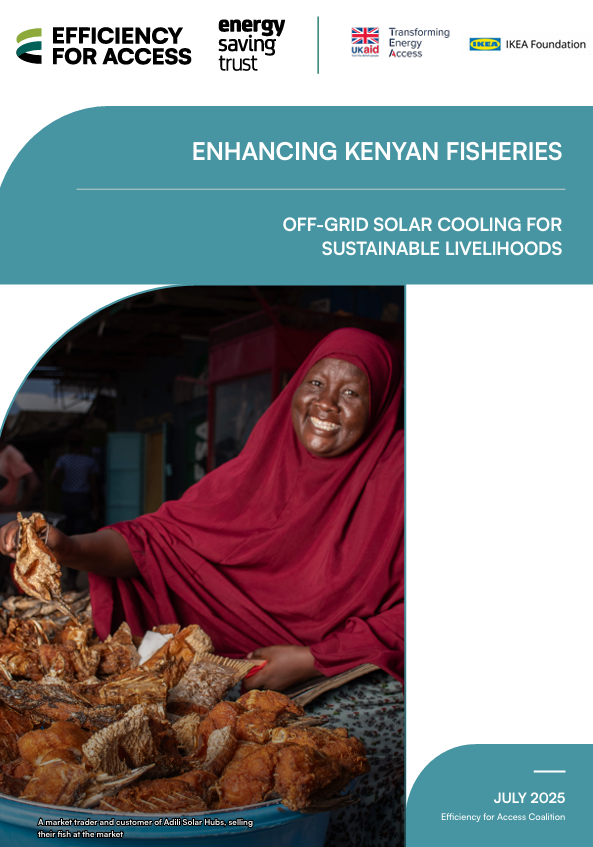
Publication date: July 2025

Author: Efficiency for Access Coalition

Description: Fishing communities around Lake Turkana in northern Kenya face a growing challenge: keeping fish fresh in extreme heat, without access to electricity. Without cold storage, much of the catch spoils before it can be sold, leading to lost income, wasted food, and limited opportunities for local people.

With support from the Efficiency for Access Research and Development Fund, Adili Solar Hubs has built a solar-powered cold chain hub on the remote island of Long’ech. This innovative facility helps to store, process and transport fresh fish using clean energy, reducing post-harvest losses, increasing incomes by up to five times, and strengthening climate resilience in one of Kenya’s most underserved regions.

The hub also provides clean water to the local community and supports sustainable fishing practices. It’s a powerful example of how early-stage investment in inclusive energy innovation can unlock long-term social, environmental, and economic benefits.

This case study explores the challenges faced by fishing communities in off-grid areas, and how Adili’s approach is helping to build a more resilient and sustainable fish value chain. It also highlights lessons learned, the role of solar-powered appliances, and the potential for scaling similar solutions in other regions.

            Download Report >>

            Visit Website >>

Publication date: 30 April 2025

Author: SEforALL

Description: Kenya's energy consumption is rapidly increasing, fueled by expanding energy access, industrialization, and growing demand. Kenya’s Energy Transition and Investment Plan, ratified in 2023, offers a pathway to achieve net zero by 2050 while meeting the country’s energy needs and balancing socio-economic development objectives. Local manufacturing and value chain development is a key opportunity for the government to maximize the socio- economic benefits of the energy transition - recognized in the draft National Energy Policy and E-mobility Policy.

            Download Report >>

            Visit Website >>

Publication date: April 2025

Author: IEA

Description: Government action is pivotal in building secure, inclusive and sustainable energy systems. Energy policy is critical not just for the energy sector but also for meeting environmental, economic and social goals. Governments need to respond to national specific needs, adapt to regional contexts, and help address global challenges. In this context, the International Energy Agency (IEA) conducts Energy Policy Reviews to support governments in developing more impactful energy and climate policies.

This Energy Policy Review of Kenya was prepared in collaboration between the government of Kenya and the IEA, whose strong partnership achieved an important milestone in 2023 when Kenya joined the IEA family as an Association country.

            Download Report >>

            Visit Website >>

Publication date: January 2025

Author: ResearchGate

Description: Access to affordable and sustainable energy is a fundamental driver of socioeconomic development, particularly in developing countries like Kenya. However, despite the promise of solar energy as a clean and accessible energy source, the sector is marred by exploitative practices, especially targeting low-income households. Solar energy companies often sell their products at exorbitant prices, leveraging a lack of awareness and weak regulatory oversight to maximize profits. This study investigated the role of government interventions in addressing this exploitation, focusing on legislation, subsidies and incentives, tax exemptions, and consumer protection mechanisms.

            Download Report >>

            Visit Website >>

Publication date: 30 August 2024

Author: International Labour Organization

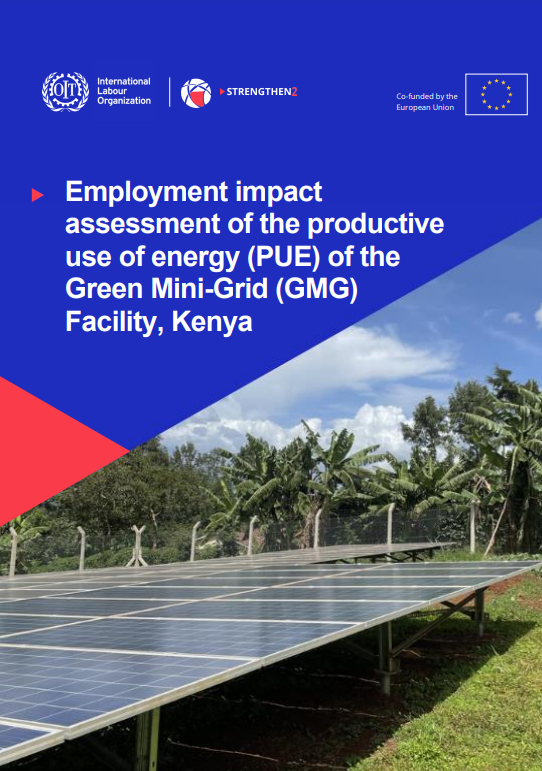
Description: The ILO STRENGTHEN2 project is conducting employment impact assessments of investments in sub-Saharan Africa to promote the creation of more and better jobs. This report presents an employment impact assessment (EmpIA) of the second phase of the Green Mini-Grid Facility Programme in Kenya. It follows on from a previous EmpIA on the short-term direct, indirect and induced employment outcomes conducted by the STRENGTHEN2 project (Oyuma, Game and Lieuw-Kie-Song 2023). To complement, this report focuses on the long-term employment and livelihood impacts from the productive use of energy (PUE) by businesses created as a result of access to the mini-grids’ electricity. It aims to uncover how mini-grids contribute to job creation in the long-term, including the types of jobs that are created and who benefitted from these the most. In addition, insights on contributing factors to employment outcomes, such as access to financial services, costing and satisfaction of services were collected to understand components that impact job outcomes and form the basis of recommendations for employment promotion.

            Download Report >>

            Visit Website >>

Publication date: 23 July 2024

Author: Oxfam

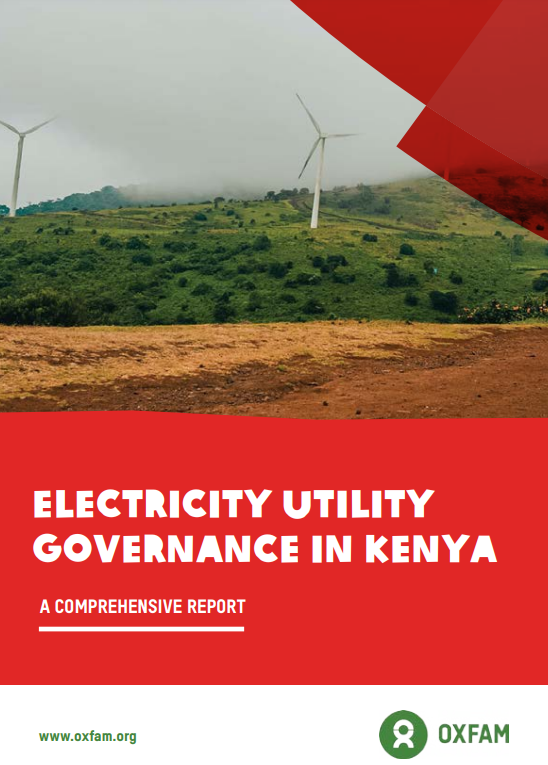
Description: This report provides a comprehensive account of the status of the electricity utility in Kenya. In doing so it analyzes the gaps in Kenya’s electricity governance and suggests ways these gaps can be addressed especially through civil society engagement.

While Kenya has seen some notable successes in advancing its energy sector – in particular in terms of increasing access to electricity – and has seen numerous efforts at reform intended to improve the functioning of the utility. Nonetheless the utility faces significant challenges that undermine the sector's performance overall. Challenges include: weaknesses in power distribution segments, the politicization of the utility company management, system and large commercial power losses. The resulting financial precarity has meant an inability to provide equitable, affordable and efficient electricity utility services. These challenges are compounded by costly power purchase agreements. Altogether these problems have threatened the financial stability of the power utility company and resulted in huge costs and debts.

            Visit Website >>

Publication date: 28 September 2023

Author: African Development Bank (AfDB)

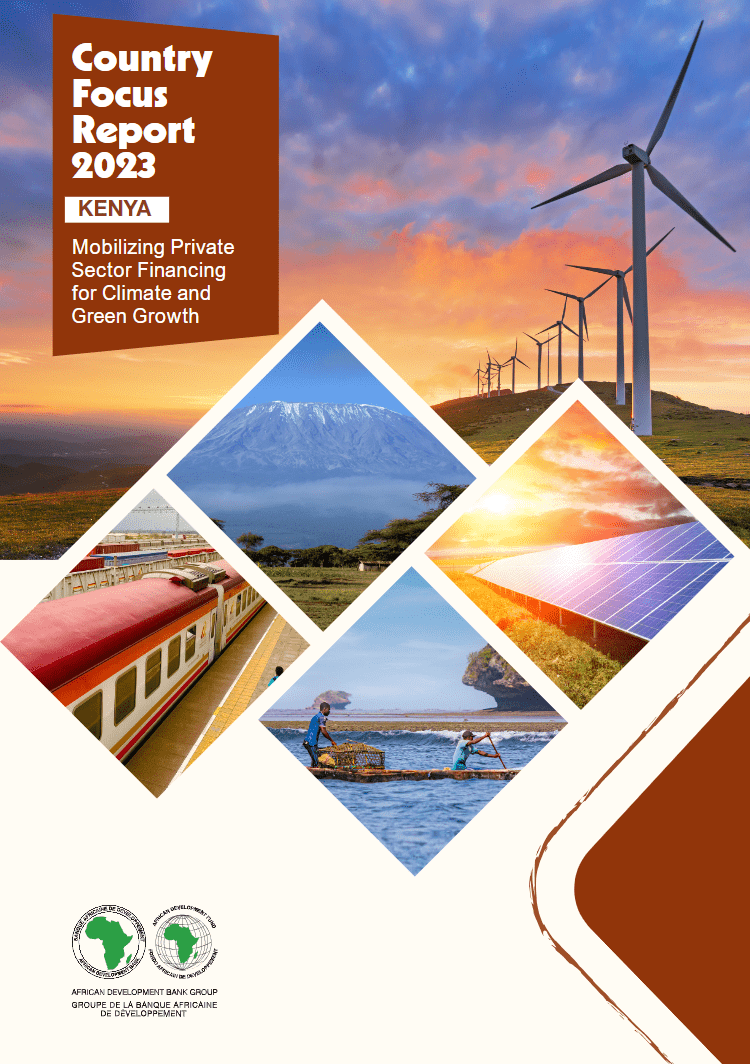
Description: Kenyan GDP growth slowed to 5.5% in 2022 from 7.5% in 2021. This slowdown was caused by shocks, namely drought, Russia’s invasion of Ukraine, and constrained international financial market conditions. To mitigate the socioeconomic impact of the shocks and to support growth, policy makers responded with prudent monetary, fiscal and exchange rate policies.

The outlook is positive. The GDP is projected to increase by 5.9% in 2023 and by 6% in 2024, premised on the assumption that commodity prices and global inflation would recede in the medium term. Inflation is projected to fall within the target band of 7.5% and 5.5% in 2023 and 2024, respectively; fiscal deficit to narrow to 6.1% and 5.5% of GDP in 2023 and 2024, respectively. The current account deficit is projected to narrow to 5.3% and to 5.1% in 2023 and 2024, respectively. Downside risks to the outlook include a slowdown in global growth and persistent global financial market tightening. Risk mitigation measures could include creating policy spaces by deepening the fiscal consolidation program, restructuring public debt, and seeking external financial assistance.

            Visit Website >>

Publication date: 6 April 2023

Author: CLASP

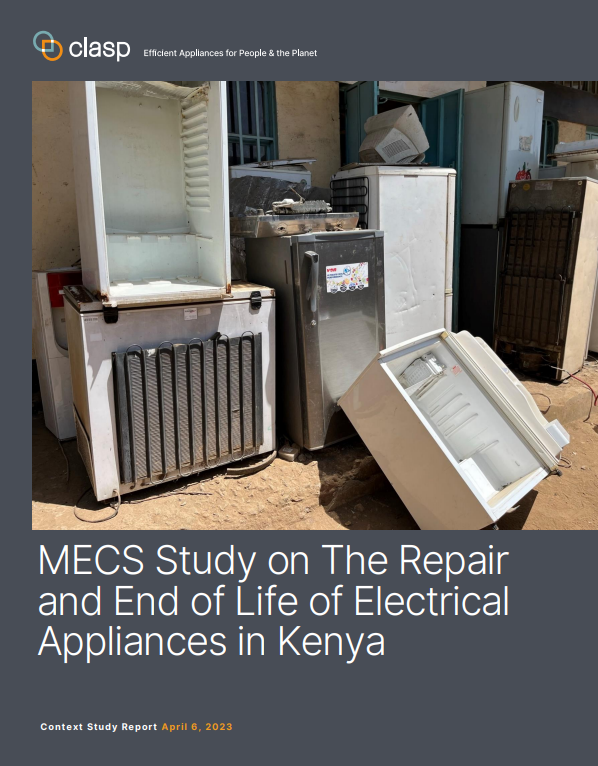
Description: This report aims to determine the state of e-waste management in Kenya by critically reviewing the corpus on electronic waste (e-waste) management in the country. Even though many studies have been conducted on e-waste management, very few are conducted on developing countries in Sub–Saharan Africa including Kenya who face a significant e-waste management issue. The rapid expansion of ICT in Kenya and the growth of the off-grid solar sector over the past decade has seen the proliferation of e-waste in the country. This e-waste poses a great threat to the environment and to the health of its inhabitants and there is a sense of urgency to act on this problem.

            Download Report >>

Publication date: 2 April 2023

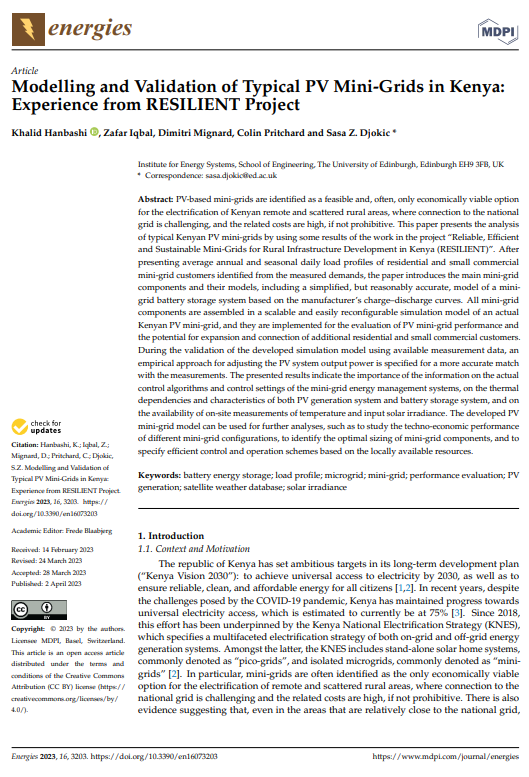
Author: MDPI / Energies

Description: PV-based mini-grids are identified as a feasible and, often, only economically viable option for the electrification of Kenyan remote and scattered rural areas, where connection to the national grid is challenging, and the related costs are high, if not prohibitive. This paper presents the analysis of typical Kenyan PV mini-grids by using some results of the work in the project “Reliable, Efficient and Sustainable Mini-Grids for Rural Infrastructure Development in Kenya (RESILIENT)”. After presenting average annual and seasonal daily load profiles of residential and small commercial mini-grid customers identified from the measured demands, the paper introduces the main mini-grid components and their models, including a simplified, but reasonably accurate, model of a mini-grid battery storage system based on the manufacturer’s charge–discharge curves.

            Download Report >>

             Visit Website >>

Publication date: 25 January 2023

Author: Nature Portfolio

Description: As the world transitions to net zero, energy storage is becoming increasingly important for applications such as electric vehicles, mini-grids, and utility-scale grid stability. The growing demand for storage will constrain raw battery materials, reduce the availability of new batteries, and increase the rate of battery retirement. As retired batteries are difficult to recycle into components, to avoid huge amounts of battery waste, reuse and repurposing options are needed. In this research, we explore the feasibility of using second-life batteries (which have been retired from their first intended life) and solar photovoltaics to provide affordable energy access to primary schools in Kenya.

            Download Report >>

             Visit Website >>
Publication date: 20 December 2022

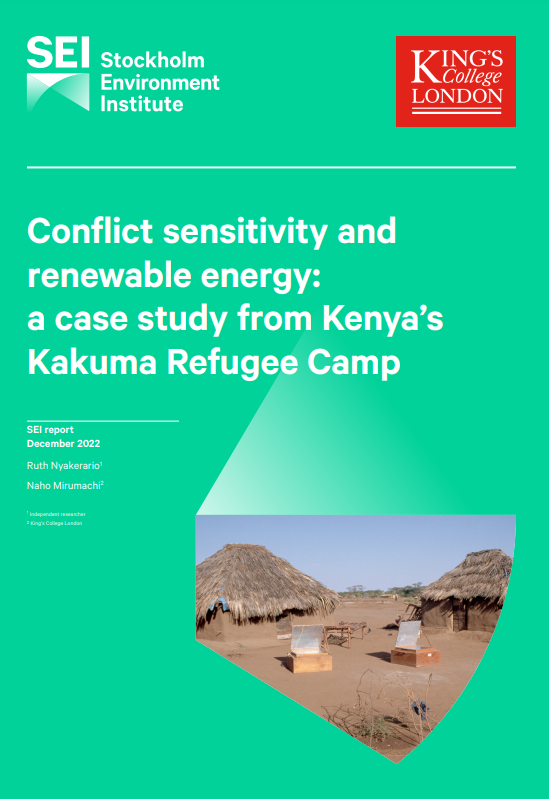
Author: Stockholm Environment Institute

Description: This report examines the need to consider conflict sensitivity when planning and carrying out renewable energy projects in energy-scarce areas, such as refugee camps. The report uses a case study from Kenya’s Kakuma Refugee Camp to look at the potential for renewable energy projects to lead to conflict or to exacerbate existing tensions. The authors argue that the issue should receive greater consideration in project planning and implementation.

            Download Report >>

             Visit Website >>
Publication date: June 2022

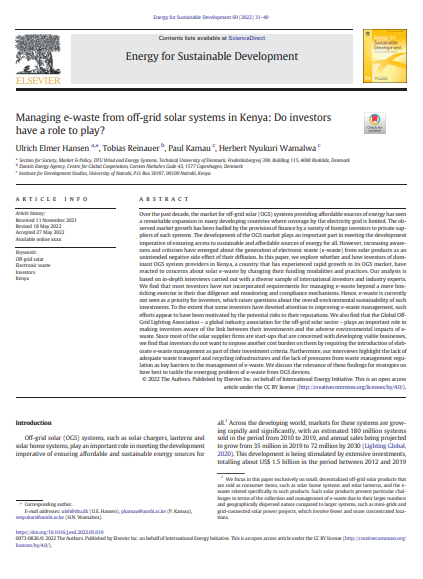
Author: Elsevier

Description: Over the past decade, the market for off-grid solar (OGS) systems providing affordable sources of energy has seen a remarkable expansion in many developing countries where coverage by the electricity grid is limited. The observed market growth has been fuelled by the provision of finance by a variety of foreign investors to private suppliers of such systems. The development of the OGS market plays an important part in meeting the development imperative of ensuring access to sustainable and affordable sources of energy for all. However, increasing awareness and criticism have emerged about the generation of electronic waste (e-waste) from solar products as an unintended negative side effect of their diffusion. 

            Download Report >>

             Visit Website >>

Publication date: April 2022

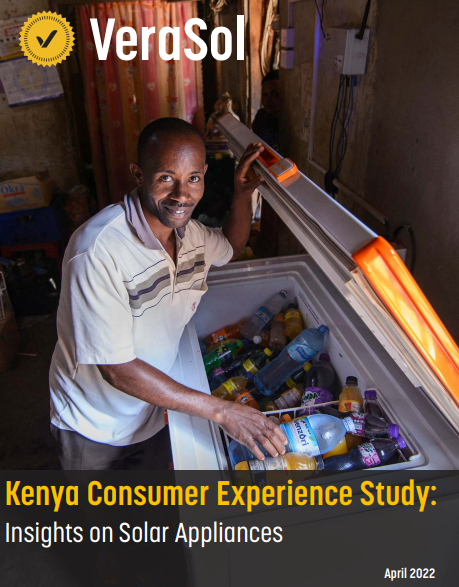
Author: VeraSol

Description: Currently, there is limited information on the penetration of off-grid solar appliances and how consumers experience and interact with them. VeraSol recognizes that this kind of data is essential for manufacturers to design products more effectively, for sector stakeholders to identify market gaps, and for programs and policymakers to scale quality assurance (QA) efforts. Using data collected during the 2021 study on off-grid solar product usage from 4,195 surveyed households in Kenya, we have taken a deeper look at solar appliance data to produce new insights on ownership of and consumer experience with off-grid solar appliances in Kenya. 

            Download Report >>

             Visit Website >>
Publication date: December 2021

Authors: ENDEV and SNV

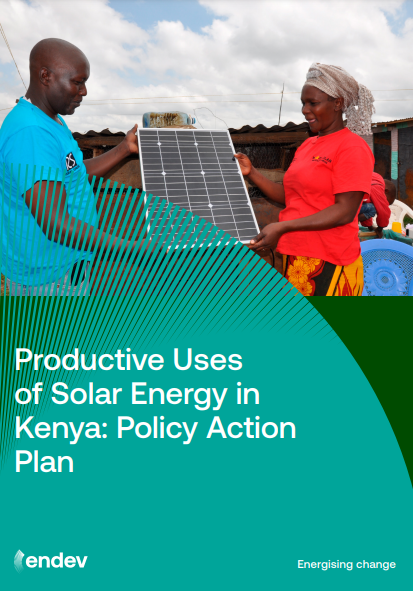
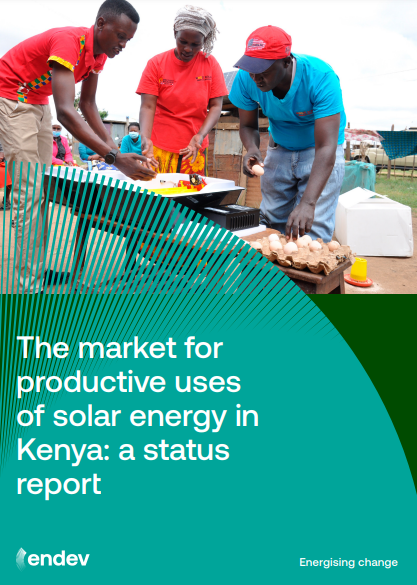
Description: Kenya is a vibrant hub to more than 100 companies selling solar-powered appliances that are being used across the national economy to generate value and income. Productive Uses of Energy (PUE) is an umbrella term for various ways of using off-grid solar photovoltaic (PV) electricity to power electric appliances that help in running a business or an income-generating activity. 

            Download Report >>

             Visit Website >>
Publication date: December 2021

Authors: ENDEV and SNV

Description: The Energising Development (EnDev) programme recognises the positive impact the productive use of solar energy (PUE) can have both on solar companies and their customers. In cooperation with the Kenya Renewable Energy Association (KEREA) PUE Working Group (WG), the SNV Netherlands Development Organisation (SNV), as part of EnDev Kenya, commissioned this study of the Kenyan PUE market to give stakeholders an up-to-date view of the space and recommendations to support its growth. Research was conducted between April and July 2021 and included a survey of 16 Kenyan PUE companies and interviews with 45 stakeholders across the PUE ecosystem. 

            Download Report >>

             Visit Website >>
Publication date: November 2021

Author: VeraSol

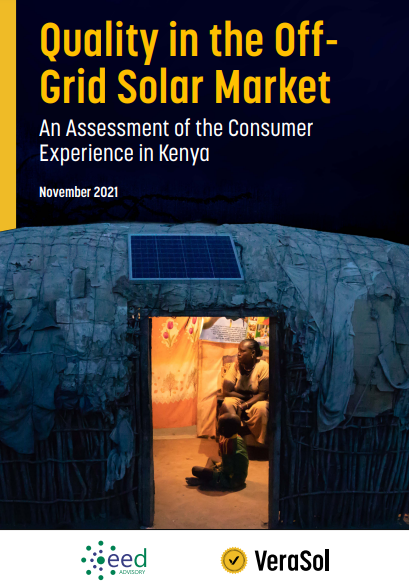
Description: This study found that more than a decade of concerted, sustained efforts to promote quality solar products in Kenya has paid off. A large majority of consumers reported being satisfied with their products across several dimensions, including price and durability. Only 12 per cent of respondents said that their product had broken down since purchase. Read the report to learn about what types of products people had in their homes, consumers’ experience with warranties and after-sales service, off-grid appliances and much more.

            Download Report >>

             Visit Website >>
Publication date: September 2021

Author: NewClimate Institute

Description: Kenya has one of the lowest carbon-intensive power systems in the region, mainly due to the high share of dispatchable renewable sources (primarily geothermal and hydro). Together with its abundance of renewable energy resources, such as wind and solar, this is one of the greatest assets to facilitate further integration of variable renewable energy (VRE) and achieve full decarbonisation of its power sector.

            Download Report >>

             Visit Website >>
STRATEGIC PARTNERS

Spintelligent
SAAEA
Pennwell
ALER

MEDIA PARTNERS

Renewables Now

EVENT PARTNERS

Africa Energy Forum
Future Energy East Africa
Future Energy Nigeria
Electricx
POWER-GEN Africa
Africa Energy Indaba 2020

Nairobi, KENYA

  • Email: info@africanpowerplatform.org
  • Phone: +254 736 692 876

Newsletter

Search