fbpx

Resources

We post here the relevant reports for the power sector in Africa. Feel free to join our efforts and share us any other you may have found. We'd be glad to add them to the list. Just sent an email to This email address is being protected from spambots. You need JavaScript enabled to view it.


Browse by Region:

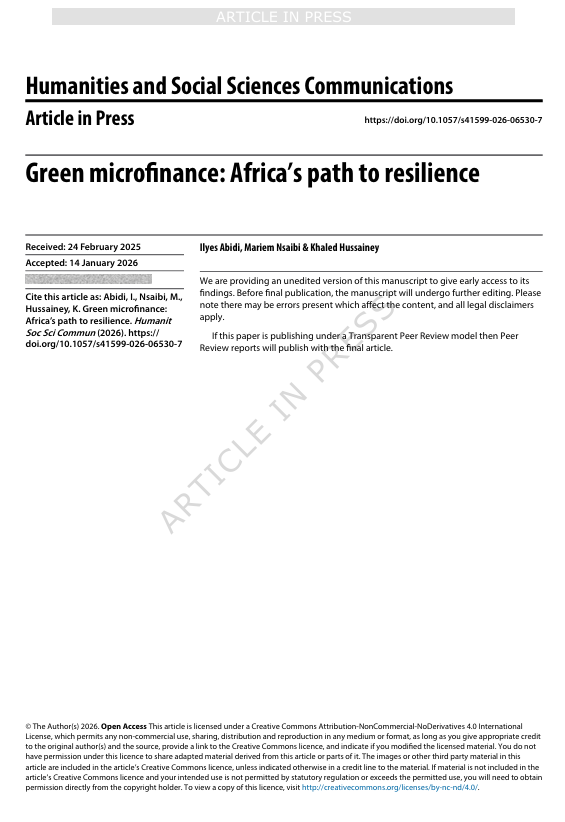
Publication date: 20 January 2026

Authors: Humanities and Social Sciences Communications

Description: Africa is an ideal setting to study the impact of green microfinance on vulnerable communities due to its specific problems, including limited access to basic services, economic inequality and the effects of climate change. This study investigates the extent to which green microfinance can address the needs of disadvantaged communities and expand access to essential services, with a particular focus on safe drinking water. To assess these relationships empirically, the results of SGMM modeling applied to data from 28 African countries, over the period 2000–2023, show that historical infrastructure has a major impact on the inertia of access to water. As unemployment and inequality intensify this problem, green microfinance is crucial to helping reduce the number of people without access to water. Although economic growth is positive, its benefits are still uneven, underlining the need for inclusive policies. Despite its low importance in this context, the use of renewable energy represents a potential solution to Africa’s social and climate challenges. This study suggests implementing renewable energy, establishing an environmental micro-insurance system, using crowdfunding, and empowering women and youth through targeted training.

            Visit Website >>

            Dowload Report >>

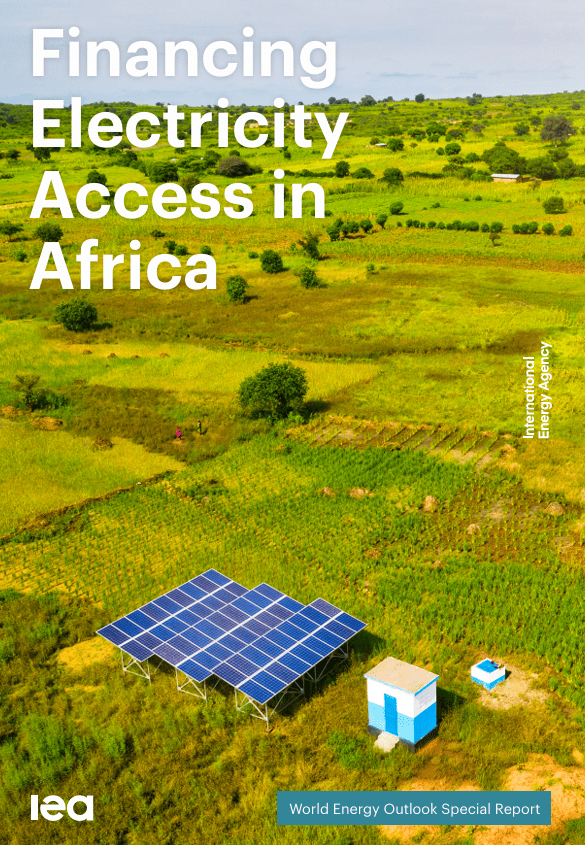
Publication date: 20 October 2025

Authors: IEA

Description: This report comes at a time when the international community is mobilising to provide additional financial support to tackle this key issue, under South Africa’s leadership of the G20, Brazil’s COP30 Presidency and the Mission 300 initiative. The IEA’s analysis underscores how international finance, resources and technical expertise must be strategically directed to drive the electricity access transformation needed across the continent, supporting Africa’s economic, social and environmental goals.

            Visit Website >>

            Dowload Report >>

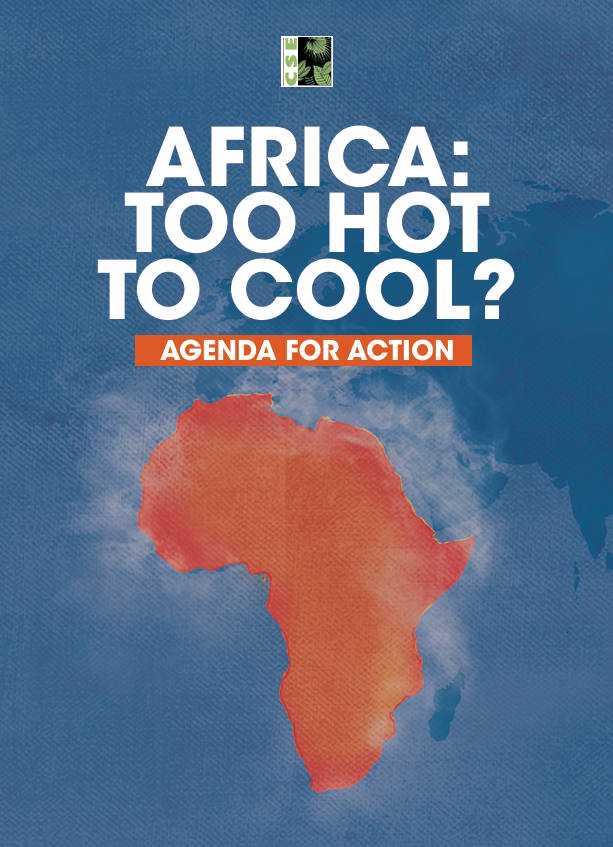
Publication date: 19 September 2025

Authors: Centre for Science and Environment

Description: This report lays bare Africa’s escalating heat crisis. It details how rising temperatures, intensifying urban heat islands, and surging cooling demand are reshaping lives across the continent.

Drawing on ground evidence and satellite analysis, it highlights the stark regional differences and the severe vulnerabilities faced by dense settlements, children, and the elderly. It traces how, from Lagos to Johannesburg, rapid urbanization is fuelling the rise in land surface temperatures and worsening exposure.

This report calls for urgent, integrated action across health, housing, energy, and urban planning to build resilience and protect Africa’s most vulnerable from the silent but deadly force of extreme heat.

            Visit Website >>

            Dowload Report >>

Publication date: 26 August 2025

Authors: Ember

Description: This report presents Ember’s analysis of Africa’s imports of solar panels from China. The Chinese solar panel export data gives valuable insights because it includes imports up to June 2025, at a monthly granularity, and for every country in the world. The data can be found in Ember’s China Solar Export Explorer. It is sourced from the General Administration of Customs of the People’s Republic of China (GACC), using the code 85414300 “Photovoltaic cells assembled in modules or made up into panels”. The value in USD is then converted by Ember into megawatts of solar panel capacity using average monthly PV module price sourced from InfoLink Consulting Group.

            Visit Website >>

            Dowload Report >>

Publication date: July 2025

Authors: IEA

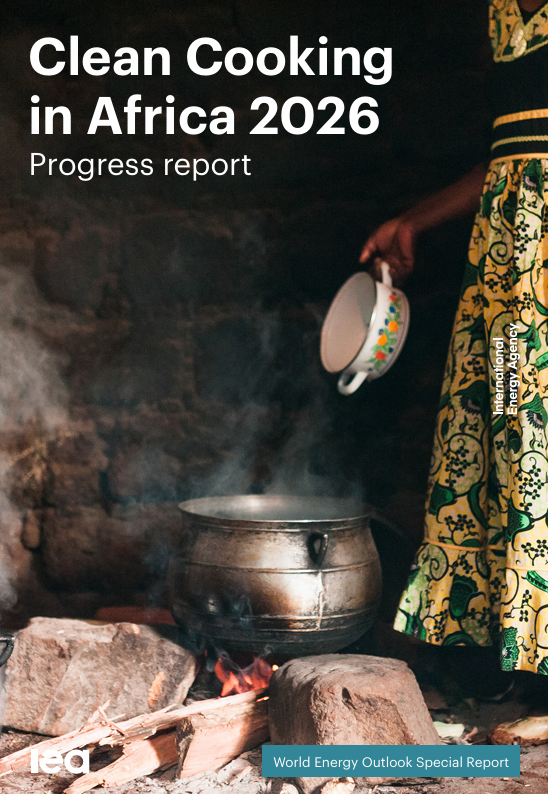
Description: Clean cooking access is a defining challenge for Africa’s prosperity. While the number of people without access to clean cooking has halved globally since 2010, the number in sub-Saharan Africa continues to rise. This harms health, economic development, and the environment – contributing to 815 000 premature deaths annually and significant deforestation.

            Visit Website >>

            Dowload Report >>

Publication date: 19 June 2025

Authors: Power Shift Africa

Description: This report makes the case for achieving 100% renewable energy in Africa. It builds from the foundational vision and policy analysis of the 2023 report Just Transition: A Climate, Energy, and Development Vision for Africa. This report deepens that vision with a technical modelling analysis of renewable energy potential across the continent, highlighting specific case studies in six countries. It shows that achieving 100% renewable energy in Africa is not only technically feasible, but substantially cheaper, better at creating jobs, better at increasing energy access for Africans, and better for protecting our environment and climate.

            Visit Website >>

            Dowload Report >>

Publication date: 16 June 2025

Authors: Power Shift Africa

Description: This brief argues that carbon markets are a false solution to Africa’s climate finance needs. Rather than delivering real, equitable, and transformative funding for climate action, these markets risk undermining Africa’s climate sovereignty by entrenching extractive economic patterns, delaying Africa’s just energy transition, fostering neocolonial land-grabs and, by failing to address climate change, further destabilising the Earth’s life support systems, leaving Africans first and worst affected. By unpacking the scientific, economic, and political limitations of these mechanisms, the brief offers evidence-based guidance to help African stakeholders reject false solutions and push for more just, transparent, and grant-based forms of climate finance.

            Visit Website >>

            Dowload Report >>

Publication date: June 2025

Authors: Boston Consulting Group

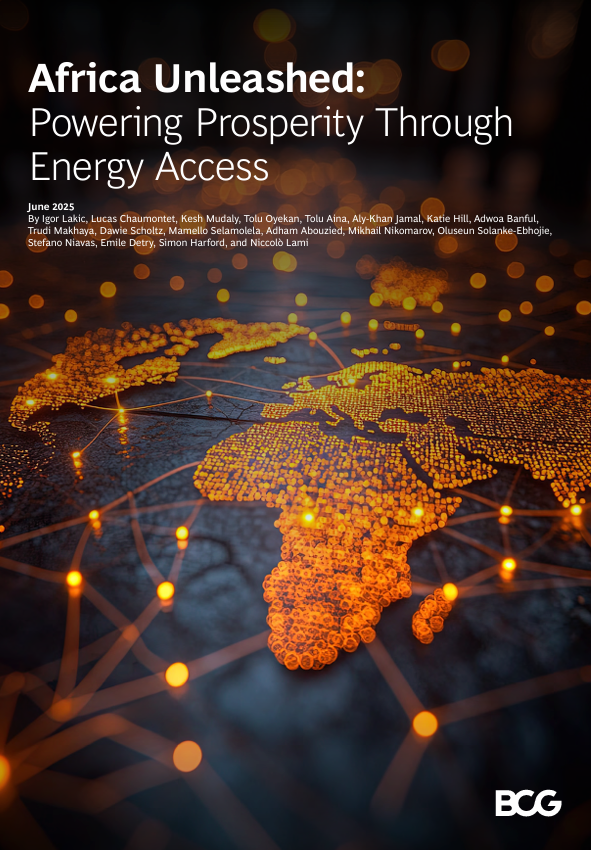
Description: Africa's future prosperity depends on rapidly expanding energy access – a cornerstone for economic and social development.

  • Over 600 million Africans still lack electricity, representing >80% of the global energy access gap.
  • Achieving universal energy access by 2030 requires catalytic funding: while $50 billion has been pledged, actual needs exceed $180 billion, demanding innovative financing and private-sector engagement.
  • Accelerating energy access could deliver immense benefits, including over $500 billion in GDP gains by 2040, millions of new jobs, improved health and education outcomes, and significant climate benefits.
  • We have identified five critical levers for the next 5 years to navigate this complexity and unlock the opportunities that lie in widespread energy access.

            Visit Website >>

            Dowload Report >>

Publication date: June 2025

Authors: The Global China Initiative (GCI)

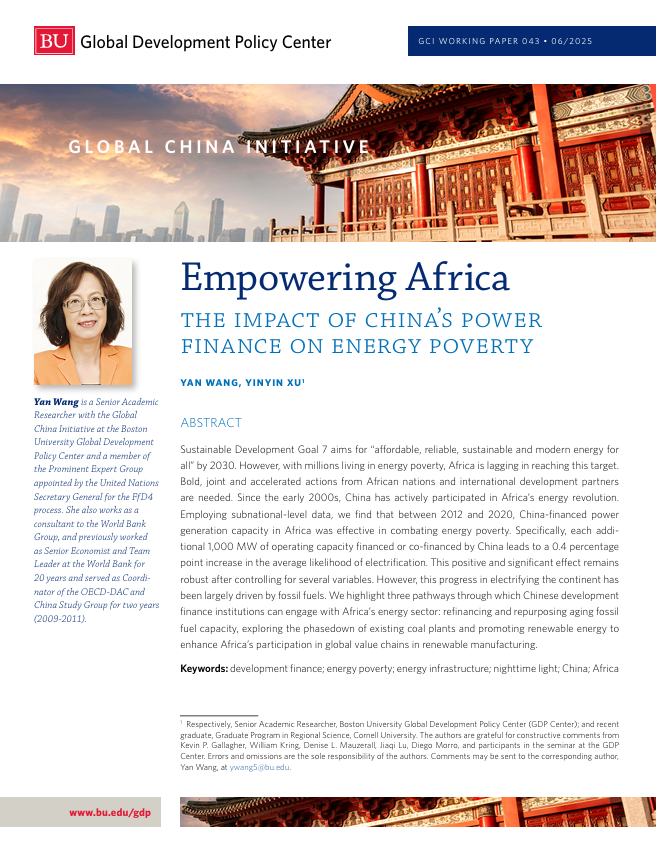
Description: Energy poverty is a pervasive and persistent development issue in Africa. Despite the continent’s rich natural resources, the “resource curse” remains a reality for countries with insufficient generation capacity, aging power plants, weak institutions and a lack of affordable energy finance. Additionally, the continent faces crippling energy deficits driven by urbanization and industrialization, coupled with limited fiscal space to support low-income users.

            Visit Website >>

            Dowload Report >>

Publication date: 9 May 2025

Authors: Power Shift Africa

Description: Announced in early 2024, Mission 300 is an ambitious initiative led by the World Bank Group (WBG) and the African Development Bank (AfDB) to connect 300 million people in sub-Saharan Africa to electricity by 2030. Aiming to mobilise $90 billion in public and private capital, the plan involves scaling up clean energy generation, expanding grid connections, deploying decentralised mini-grids, and improving transmission and distribution through regional interconnection and market reform.

If delivered equitably and effectively, Mission 300 could represent a step-change for energy access in sub-Saharan Africa. However, if it adheres to the prevailing model of climate and development finance - marked by over-reliance on private capital, a preference for privatised energy systems dominated by fossil fuels, and limited engagement with local communities - it risks failing the very people it intends to serve and exacerbating Africa’s soaring debt crisis.

            Visit Website >>

            Dowload Report >>

Publication date: 28 February 2025

Authors: Nature Energy

Description: In sub-Saharan Africa, urban electricity inequities manifesting as poor power quality and reliability (PQR) are prevalent. Yet, granular PQR data and frameworks for assessing PQR inequities and guiding equitable electricity interventions remain sparse. To address this gap, we present a conceptual framework that leverages energy justice, capability and multidimensional poverty theories alongside concepts relating to power systems to quantify PQR inequities in sub-Saharan Africa. To demonstrate our framework and using 1 year’s worth of remotely sensed PQR data from Accra, Ghana, we assessed the distributive scale of PQR inequities, explored how multidimensional poverty exacerbates these inequities and examined the impact of PQR on households’ domestic capabilities. We found wider patterns of PQR inequities and a link between poor PQR and neighbourhoods with higher multidimensional poverty. We conclude that using remotely sensed data combined with justice and capability frameworks ofers a powerful method for revealing PQR inequities and driving sustainable energy transitions.

            Visit Website >>

Publication date: 28 January 2025

Authors: IOP Publishing

Description: Africa’s energy transition is unique and complicated by—among other things—the pervasive presence of ‘Zombie Energy Systems’ (ZES). These are outdated, inefficient, and environmentally harmful energy systems that persist despite being obsolete (e.g. old and mismanaged electrical grid systems and obsolete electrical appliances). These ZES hinder Africa’s energy transition, yet they receive limited attention in the international energy development arena. Rooted in colonial-era legacies, economic constraints, and policy shortcomings, these energy systems have led to a persistent misalignment between energy supply and development goals, perpetuating energy poverty and limiting economic growth. In this piece, we identify ZES as a critical barrier to Africa’s energy transition, arguing that addressing it requires more than just infrastructure replacement.

            Download Report >>

            Visit Website >>

Publication date: 12 December 2024

Authors: Tony Blair Institute for Global Change

Description: The biggest challenge facing countries is for their government leaders to prioritize, take the right policy decisions, and effectively implement them. I take pride in my Institute’s role in addressing this challenge by collaborating with the U.S. government’s Power Africa initiative. Together, we have supported government leaders across Africa in translating their power sector priorities into tangible change for their citizens. Over the past decade, my Institute has been privileged to execute the Power Africa Senior Advisors Group program. This experience sheds light on the importance of good leadership for making the power sector deliver better, cleaner, and more affordable energy solutions, and how trust, expertise, and experience are key when working with leaders to make a change.

            Download Report >>

            Visit Website >>

Publication date: 14 November 2024

Authors: PREO

Description: As the world races toward 2050, the challenge of feeding a booming population looms large, especially in Africa, where the population is projected to soar by 63% and account for a quarter of the global population.

This report on powering agricultural productivity outlines both the challenges and opportunities for agriculture and food production in the face of rapidly increasing population growth on the continent. Discover how PREO is supporting companies across sub-Saharan Africa to harness and scale renewable energy innovations like solar-powered mechanisation, water pumps, refrigeration, and cold storage, to improve incomes, bolster climate resilience and strengthen food security.

            Download Report >>

            Visit Website >>

Publication date: 3 October 2024

Authors: ReSAKSS

Description: Transitioning to renewable energy is a critical part of addressing climate change and ensuring sustainable development. However, if this transition does not consider the social, economic, and financial implications for African countries, it cannot be considered a “just” transition for Africa. At the social level, the transition to low-carbon pathways, such as renewable energy sources, will create new employment opportunities. However, poor countries and marginalized populations may face disproportionate challenges during this transition if they are excluded from decision-making processes or do not benefit from these new job prospects. It is therefore essential to ensure that low-carbon pathways help reduce social inequalities and improve livelihoods for people in these countries and communities. At the economic and financial levels, transitioning to low-carbon pathways will require significant funding to develop national or regional value chains, invest in research and development, and build capacity. International financial support will be crucial for developing countries, especially in Africa, to ensure a just transition.

            Download Report >>

            Visit Website >>

Publication date: July 2024

Authors: Africa Policy Research Institute

Description: Solar photovoltaic (PV) technology is a key clean energy technology and an important source of clean electricity critical for the global green transition. As the world grapples with climate change, the demand for cleaner and more sustainable energy sources has never been greater. In this context, solar PV technology has emerged as a pivotal component of the global energy shift. This paper explores how Africa, with its abundant natural resources, can leverage its critical minerals, trade capacities, and latent productive capabilities to develop a solar PV manufacturing sector.

            Visit Website >>

Publication date: April 2024

Authors: World Bank

Description: The extension of electricity into rural areas has been the main focus of efforts to achieve universal access to reliable, affordable, and modern energy by 2030. On the African continent and elsewhere, however, rapid urbanization has produced new patterns of human settlement that blur the distinction between rural and urban. As a case study of Kenya demonstrates, access metrics aggregated at the rural or urban level do not equip governments and their partners to properly identify or target sites for electrification. Spatialized frameworks and data that define space along a rural–urban continuum or as urban catchment areas can improve policy makers’ understanding of the specific barriers to access that communities face.

            Download Report >>

            Visit Website >>

Publication date: 16 May 2024

Authors: Nature Communications

Description: Off-grid photovoltaic systems have been proposed as a panacea for economies with poor electricity access, offering a lower-cost “leapfrog” over grid infrastructure used in higher-income economies. Previous research examining pathways to electricity access may understate the role of off-grid photovoltaics as it has not considered reliability and carbon pricing impacts. We perform high-resolution geospatial analysis on universal household electricity access in Sub-Saharan Africa that includes these aspects via least-cost pathways at different electricity demand levels. Under our “Tier 3" demand reference scenario, 24% of our study’s 470 million people obtaining electricity access by 2030 do so via off-grid photovoltaics. Including a unit cost for unmet demand of 0.50 US dollars ($)/kWh, to penalise poor system reliability increases this share to 41%. Applying a carbon price (around $80/tonne CO2-eq) increases it to 38%. Our results indicate considerable diversity in the level of policy intervention needed between countries and suggest several regions where lower levels of policy intervention may be effective.

            Download Report >>

            Visit Website >>

Publication date: April 2024

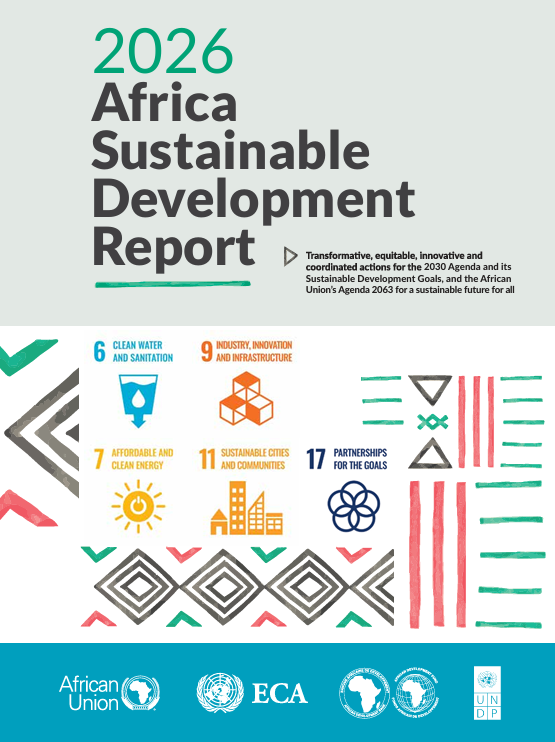
Authors: United Nations

Description: The Economic Report on Africa (ERA) 2024 presents the case for investing in a just and sustainable transition (JST) while achieving energy access for all. Using country case studies, macro, sectoral and firm evidence, and the findings and recommendations of previous ERA editions, the 2024 report assesses the necessary conditions for a JST in Africa and how to catalyze the needed investment. The 2024 ERA proposes defining the JST from an African perspective and highlights the opportunities and policy imperatives for African countries to achieve it.

            Download Report >>

            Visit Website >>

STRATEGIC PARTNERS

Spintelligent
SAAEA
Pennwell
ALER

MEDIA PARTNERS

Renewables Now

EVENT PARTNERS

Africa Energy Forum
Future Energy East Africa
Future Energy Nigeria
Electricx
POWER-GEN Africa
Africa Energy Indaba 2020

Nairobi, KENYA

  • Email: info@africanpowerplatform.org
  • Phone: +254 736 692 876

Newsletter

Search