fbpx

News

News

16 June 2026: The World Bank Group and the African Development Bank Group announced today that Mission 300 has connected over 50 million people to electricity across 40 countries — a major milestone toward the initiative's goal of reaching 300 million people by 2030.

Mission 300 is now delivering electricity access at nearly double the pace recorded at the start of the initiative. By investing across the full energy value chain — from generation and transmission to last-mile distribution — it has driven gains in both on-grid and off-grid access, connecting households, businesses, and institutions to power faster than before.

In Tanzania, for example, 7.5 million people have gained access to power under Mission 300 — a five-fold increase in the average annual pace of electrification prior to the initiative — driven by increased financing and growing policy momentum. In Ethiopia, 4.6 million people have been connected, supported by reforms that made grid connections more affordable.

Where past efforts often worked in parallel, Mission 300 aligns governments, partners, and private sector investors around a single shared agenda. That coordination is what is driving faster results: stronger political commitment, deeper policy reform, and the mobilization of resources needed to accelerate electrification and deliver impact on the ground.

To date, the African Development Bank Group and the World Bank Group have committed nearly $15 billion in financing and attracted about $4.5 billion in co-financing for Mission 300-related projects, while additional development partners have pledged more than $7 billion in support of Africa’s energy sector.

Mission 300’s unique approach is also changing the conditions under which private investors participate in African energy markets. By combining government reforms with layered public financing — including grants, guarantees, and concessional loans — the platform is mitigating risks for private providers to serve communities that were previously too costly or difficult to serve.

In Nigeria, more than 4.5 million people have been connected through private sector-led initiatives, demonstrating how well-designed public support and partner financing can help create commercially viable markets.

To date, 30 countries have launched National Energy Compacts, country-led plans to strengthen energy systems, expand affordable power generation, scale renewable energy solutions, promote regional integration, and increase private sector participation. Additional compacts are expected to be launched by Burkina Faso, the Central African Republic, Djibouti, Gabon, Rwanda and Uganda at the Africa Energy Forum this week.

“Fifty million people connected is a milestone — but the bigger story is the pace and the partnership behind it. Mission 300 is helping countries move faster, connect more people, and build a platform that will last well beyond this effort — one others can use, build on, and scale for years to come. At the end of the day, electricity is not just about power. It is about what it enables: jobs, business, health care, education, and opportunity,” said Ajay Banga, President of the World Bank Group.

“The 50 million milestone is indeed commendable. This must become the launchpad for faster electrification to enhance food security on account of affordable irrigation; increase capacity to store medicines for better health outcomes, and spur more inclusive economic and social empowerment,” said Sidi Ould Tah, President of the African Development Bank Group. “Governments, partners, private sector, and others who comprise what has evolved into an M300 movement must double down to achieve access for 300 million people by 2030. We need all hands on deck – literally!"

Partners are leaning into Mission 300

"Connecting over 50 million to electricity is a major milestone for Mission 300. It proves that African-led big bets, empowered by bold investment and partnership, can deliver results quickly and at scale,” said Rajiv J. Shah, President of The Rockefeller Foundation. “The Rockefeller Foundation, along with the Global Energy Alliance, has committed more than $100 million to Mission 300 because we know that every new connection means a family with new access to the jobs, education, and the dignity they deserve.”

"The 50 million milestone shows that Mission 300 is moving beyond ambition and delivering real results for people across Africa. These achievements reflect the strong political commitment and implementation capacity of African governments,” said Damilola Ogunbiyi, CEO and Special Representative of the UN Secretary-General for Sustainable Energy for All. “Together with our partners, Sustainable Energy for All will continue to support governments in implementing their National Energy Compacts and accelerating progress towards universal energy access by 2030.”

“Achieving electricity connections for 50 million people proves that we can move faster when public, private and philanthropic partners align behind country-led solutions,” said Woochong Um, CEO of Global Energy Alliance for People and Planet. “As Africa becomes home to the world's largest young workforce, Mission 300 is the engine that will help power the jobs and economic growth the continent urgently needs.”

Launched in 2024, Mission 300 is a joint initiative of the World Bank Group and the African Development Bank Group supported by The Rockefeller Foundation, the Global Energy Alliance for People and Planet and Sustainable Energy for All, and a broad coalition of governments, development institutions, and private sector partners.
17 June 2026: Ohmium International Inc., a leading manufacturer of high-efficiency, modular Proton Exchange Membrane (PEM) electrolyzers, and Hynfra P.S.A., a prominent green hydrogen and green ammonia project developer, today announced the signing of a master cooperation agreement to advance green hydrogen projects in Mauritania, Jordan, and Oman.

The cooperation agreement covers the projects’ Front-End Engineering and Design (FEED) stage and establishes the framework for ongoing collaboration. Ohmium also will provide technical support and PEM electrolyzer expertise throughout the FEED and development stages for the three hydrogen projects mentioned. These projects are designed to produce green hydrogen for green ammonia applications, advancing energy security and long-term resilience in host countries by building domestically sourced clean energy capacity and reducing dependence on imported fossil fuels, while also supplying RFNBO-compliant green ammonia for export, including to European markets.

“We work with multiple technology partners across our green hydrogen and ammonia projects, and we maintain at least two qualified suppliers for each technology category. That's a deliberate choice, and it reflects the complexity of what we're building. Ohmium is one of our PEM electrolyzer partners,” said Tomoho Umeda, CEO of Hynfra.

The cooperation agreement for Hynfra and Ohmium reflects the accelerating global momentum behind green hydrogen as a cornerstone of the energy transition and a critical tool for national energy security. By combining Ohmium’s advanced PEM electrolyzer technology with Hynfra’s exceptional project development expertise and regional relationships, the companies are well-positioned to deliver large-scale green hydrogen and green ammonia solutions that strengthen energy independence across the MENA region.

22 June 2026: Sustainable Energy for All (SEforALL) and the European Bank for Reconstruction and Development (EBRD) today signed a Memorandum of Understanding (MoU) to strengthen collaboration on sustainable energy and climate action across countries in Africa and other emerging and developing economies.

Over the initial 2026 to 2028 period, SEforALL and EBRD will prioritize collaboration on decentralized renewable energy, green finance, carbon markets, sustainable cooling and climate resilience, alongside policy support, technical assistance and knowledge sharing.

The organizations will also explore opportunities to advance initiatives such as Mission 300, the Universal Energy Facility and the Nigeria Distributed Renewable Energy Fund. Areas of collaboration will include expanding mini-grids, increasing access to cooling and agricultural cold chains, supporting local financial institutions in scaling green technologies, and helping countries strengthen policy and regulatory frameworks to attract investment.

The partnership builds on the complementary strengths of both organisations. SEforALL has worked in more than 115 countries to support sustainable energy transitions and mobilized billions of dollars in investment across energy access, energy transition planning, sustainable cooling, green industrialization and energy efficiency. EBRD brings extensive expertise in mobilizing investment, strengthening markets and working with the private sector to build competitive, resilient and sustainable economies across its countries of operation. Under its Green Economy Transition (GET) 2030 Strategy, EBRD is scaling market-enabling investments across six sectors critical to the green transition and aims to mobilize at least €150 billion in cumulative green financing by 2030.

The MoU was signed in London on the sidelines of London Climate Action Week by Damilola Ogunbiyi, CEO and Special Representative of the UN Secretary-General for SEforALL, and Heike Harmgart, Managing Director for Sub-Saharan Africa at EBRD.

Heike Harmgart, Managing Director for Sub-Saharan Africa, EBRD, said:

"The energy transition is ultimately about improving lives while building stronger, more resilient economies. Partnerships are essential to achieving the speed and scale required. This agreement will help us accelerate investment, support country-led solutions and create practical pathways for expanding clean energy access and climate resilience across our countries of operation."

Damilola Ogunbiyi, CEO and Special Representative of the UN Secretary-General for Sustainable Energy for All, said:

"Delivering a just energy transition at the speed and scale the world needs will require unprecedented collaboration. This partnership demonstrates what that looks like: combining policy expertise, investment and implementation capacity to help countries move faster from ambition to action."

The signing comes at a time when implementation is taking centre stage in global climate discussions. As the focus shifts from commitments to delivery, countries need partners that can mobilize investment, strengthen enabling environments and turn ambition into tangible results. By combining EBRD's investment and market-building expertise with SEforALL's country-level implementation experience and global convening power, the partnership is well-positioned to help countries accelerate sustainable energy transitions at scale.

By combining their expertise, networks and resources, SEforALL and EBRD aim to help countries accelerate progress towards universal energy access, strengthen energy security and build more prosperous and resilient economies.

23 June 2026: The Alliance for Renewable Electrification (ARE) welcomes a landmark global electrification target announced by COP31 President-Designate Murat Kurum, calling for electricity’s share of final energy demand to rise from just over 20% today to 35% by 2035.

This is a major policy win and one that reflects months of collective advocacy. ARE is proud to be part of the #ElectrifyNow campaign, a growing coalition of leading renewable energy advocates pushing for a dedicated global electrification target alongside renewable energy and energy efficiency goals.

Today, the COP31 Presidency answered that call. This is also a signal from governments and businesses around the world that renewable electrification, across the board, is the right path to securing cheap, abundant, reliable and homegrown energy.

For ARE, which turbocharges renewable electrification across emerging countries in Africa, Asia, and Latin America & The Caribbean, this announcement validates both the urgency and the opportunity of powering people and businesses. Over 666 million people remain without electricity today, and 18 of the 20 countries with the largest electricity access deficits are in sub-Saharan Africa. Businesses across emerging markets are held back too — stunted by chronic outages and often forced to depend on costly, polluting diesel generators that expose them to oil price volatility and pollution.

Power is also the starting point for any business: without it, enterprises cannot start, grow, or drive the sustainable economic development their communities need. It is precisely in these markets that the opportunity to leapfrog to a renewable electrification economy is greatest.

A global target means little without global delivery. Reaching 35% by 2035 demands a massive acceleration in investment, infrastructure build-out, and private sector mobilisation — particularly in developing countries, where the need is most acute and the opportunity is largest.

Therefore, ARE joins #ElectrifyNow in calling for faster action to put electrification at the centre of energy policy and accelerate the transition away from fossil fuels — and stands ready, with its members, to translate this target into power on the ground, project by project, grid by grid, community by community, uniting power for people, for industry, and for entire countries.

We call on governments, development finance institutions, institutional and private investors, and other international funding partners to align their resources and policies behind this goal, ensuring the energy transition is truly global and leaves no country, and no market, behind. ARE and its Members look forward to pushing for the full securing of this target at COP31 Türkiye.

“A target without finance is just a number. But a target with the world’s attention behind it, that is a catalyst. With over 666 million people still without electricity and the urgent need to power businesses and industry in emerging markets, the case for rapid and scaled-up action could not be clearer. ARE and its Members are ready to deliver. We call on every government, every development bank, and every private investor to match this ambition with adequate capital and a relentless focus on execution.” — David Lecoque, CEO, Alliance for Renewable Electrification.

The advocacy has already begun, and with the COP31 Presidency now lending its full weight to this target, the path ahead looks brighter than ever. We applaud the Presidency for this bold commitment and look forward, with renewed determination, to the road ahead — all the way to COP32 in Ethiopia.

23 June 2026: Sustainable Energy for All (SEforALL) and the Global Climate Finance Centre (GCFC) today signed a Memorandum of Understanding (MoU) to accelerate climate finance action across emerging and developing markets through capacity building, strategic convenings and innovative financing solutions.

At a time when implementation is taking centre stage in global climate discussions, the partnership reflects a growing recognition that delivering the energy transition will require stronger institutions, deeper financial markets and greater collaboration between public and private actors.

The partnership will strengthen collaboration in key areas, including climate finance training, institutional investor engagement and stakeholder convenings, with an initial focus on countries such as Nigeria, Senegal and Ethiopia.

Together, SEforALL and GCFC will develop and deliver climate finance training programmes for financial institutions, leveraging GCFC's expertise in climate finance innovation and market intelligence alongside SEforALL's extensive country networks and implementation experience across emerging and developing economies.

The organizations will also explore opportunities to jointly convene governments, investors and development partners through high-level dialogues, roundtables and public forums to accelerate climate finance flows where demand is greatest. In addition, the partnership will explore innovative approaches to unlocking new sources of climate finance for energy transition projects.

Omar Saif, Vice President, Global Climate Finance Centre, said:

"Climate finance must move faster, reach further and become more accessible to emerging markets. Through this partnership, we will help strengthen institutions, build local capacity and create practical pathways for mobilizing investment where it can deliver the greatest impact."

Mikael Melin, Director of Partnerships & Development, SEforALL, said:

"The energy transition is not just about mobilizing more finance. It's about ensuring countries have the right partnerships and tools to turn investment into real progress for people and communities."

The MoU was signed on the sidelines of London Climate Action Week by Mikael Melin, Director of Partnerships & Development at SEforALL, and Omar Saif, Vice President of the Global Climate Finance Centre.

As London Climate Action Week places increasing emphasis on implementation, the partnership reflects a broader shift in the global climate agenda from setting targets to building the systems, institutions and financing mechanisms required to deliver them.

By combining their expertise, networks and resources, SEforALL and GCFC aim to help countries unlock greater flows of climate finance, strengthen investment ecosystems and accelerate progress towards sustainable, resilient and inclusive economies.

25 June 2026: Eastern Africa stands to gain more affordable, reliable, and cleaner electricity as countries strengthen cross-border power trade and regional energy cooperation. To help deliver this transformation, the World Bank Group Board has approved a $1.6 billion financing package for the Regional Energy Transmission, Trade & Decarbonization program for Eastern Africa (RETRADE-EA), a 10-year initiative to accelerate regional power integration, expand energy access, and unlock economic opportunity.

RETRADE-EA will finance both infrastructure and institutional capacity development needed to enable efficient regional power trade. The program will strengthen cross-border connectivity, improve system resilience, and facilitate the integration of countries that remain outside the regional grid, including Somalia. It will also support the launch of the Eastern Africa Power Pool (EAPP) Day-Ahead Market, strengthen regional system planning and operations, improve governance and regulatory harmonization, and promote greater private sector participation, including through Independent Transmission Projects.

The first phase of the program includes the Uganda-Tanzania Interconnector Project (UTIP), supported by $250 million in concessional finance from the International Development Association for Uganda. The project will finance the construction of a new high-voltage electricity transmission line connecting Uganda to Tanzania, creating a critical connection between Uganda’s surplus clean energy resources and regional electricity markets.

The first phase of the RETRADE-EA program also includes a $10 million IDA grant and a $3.5 million grant from the Energy Sector Management Assistance Program (ESMAP) to the Eastern Africa Power Pool (EAPP) for the Regional Power Trade and Market Project (RTMP). The project will strengthen regional market coordination and institutional capacity, resulting in more than 5,000 gigawatt-hours of cross-border electricity trade annually by 2031, greater market integration between the EAPP and the South African Power Pool, and enhanced energy security and affordability for member states.

Uganda currently generates more electricity than it consumes domestically, with significant surplus hydropower going underutilized. The UTIP project addresses this directly by financing the construction of approximately 260 kilometers of 400 kilovolt double-circuit transmission line running from Wobulenzi to Masaka to Mutukula on the Uganda-Tanzania border. The new line will create a transfer capacity of 1,000 megawatts, establishing a critical physical link between Uganda and the regional grid.

By the UTIP project's target end-date of 2031, at least 452 gigawatt-hours of electricity are expected to be traded between Uganda and Tanzania annually. Across the wider Eastern Africa Power Pool, the shift from expensive, polluting thermal generation to Uganda's clean hydropower is projected to avoid 25.8 million metric tons of CO2 emissions — a meaningful contribution to regional decarbonization.

25 June 2026: Zambia is to invest millions of dollars of savings realised through the successful $1.36 billion debt buyback in projects to provide reliable and affordable electricity access as part of an innovative transaction backed by the African Development Bank Group.

In a pioneering approach to development finance, the government of Zambia used a $600 million loan from the African Development Bank Group coupled with its own resources to buy back the $1.36 billion sovereign Eurobond.

As part of savings which could have gone into future debt servicing, the Zambian government has committed to earmark $275 million, to be invested in the country’s energy sector, an approach that could be emulated by other African countries to unlock development financing.

Nkulukusa outlined the government's 15-year vision for the programme, framing it as a direct response to constraints that have long held Zambia back.

The operation aligns with the Four Cardinal Points of the African Development Bank Group, particularly the priorities of enhancing access to capital and building climate resilient infrastructure. It also complements broader efforts to expand access to affordable, dependable, and sustainable energy throughout the continent.

Zambia has made significant progress in implementing economic reforms and restoring macroeconomic stability. The transaction supports the country's commitment to strengthening public finances while investing in a stronger and more resilient electricity network that is critical to supporting growth in mining, agriculture, manufacturing, tourism and other sectors of the economy.

The African Development Bank Group remains committed to working with Zambia and its development partners to advance innovative financing solutions that promote sustainable development and improve the lives of citizens.

26 June 2026: Mozambique is taking a major step toward climate-resilient development with the launch of a 7-year rural electrification initiative that will expand access to clean energy, strengthen rural livelihoods and avoid an estimated 399,131 tonnes of carbon dioxide equivalent emissions over its lifetime. The project reflects a long-term commitment by national and international partners to advance Mozambique's energy transition while helping vulnerable communities adapt to growing climate risks.

Among the world’s most climate-vulnerable countries, Mozambique faces increasing exposure to floods, droughts, tropical cyclones and extreme temperatures. These climate shocks disproportionately affect rural communities, which account for more than 60 percent of the population and rely heavily on rain-fed agriculture and traditional biomass for energy.

In response to these challenges, the new project funded by the Green Climate Fund (GCF) and implemented by Enabel, the Belgian Agency for International Cooperation; FUNAE, Mozambique’s National Energy Fund which is the country’s implementation agency for off-grid and rural electrification affairs; and Sustainable Energy for All (SEforALL), the energy-focused UN-aligned organization, will impact 225,000 people (52% of which being women) through solar-powered mini-grids across rural communities while supporting the adoption of Productive Uses of Renewable Energy (PURE) technologies that improve livelihoods and reduce climate vulnerability.

Representatives from the three organizations emphasized the importance of coordinated action and country-led implementation in achieving Mozambique’s ambitious energy, development and climate goals.

Lolade Abiola, Chief of Staff at Sustainable Energy for All said:

“By aligning renewable energy deployment with climate-resilient economic development, the project offers a scalable and country-owned model for inclusive green growth in Mozambique. Designed with long-term sustainability in mind, the project adopts a performance-based, market-driven financing approach. Mini-grid developers will co-finance a portion of capital costs, while PURE incentives will be tailored to evolving market conditions. These mechanisms are intended to de-risk early-stage investments, stimulate private sector participation, and gradually reduce dependence on concessional finance.”

Mety Gondola, CEO of FUNAE during his speech at the subsidiary agreement signing ceremony said:

“…this project is the start of the Government’s commitment to making a difference in the lives of local residents. Energy will act as a platform through which social transformation can be achieved.”

While praising the Government’s leadership and coordination efforts that enabled this initiative, Adriaan Tas, Country Director of Enabel in Mozambique said:

“What makes this project exciting is that it treats rural energy demand as a market to be built, and it asks the private sector to build it with us. Productive use of energy is where access becomes income, and where climate finance starts paying for itself in livelihoods.”

The project will support rural Mozambicans to gain increased resilience through improved food and water security, diversified livelihoods, and enhanced access to health and education services. The initiative will also support the deployment of approximately 300 to 400 climate-smart PURE solutions, helping to create more resilient and productive rural value chains.

The project will also operationalize Mozambique’s new mini-grid regulatory framework by introducing competitive procurement processes, streamlining licensing procedures and reinforcing regulatory compliance across project sites.

The project forms part of a broader government-led Country Platform that brings together public institutions, development partners, and financiers to align policies, coordinate investments, and streamline technical support. This collaborative mechanism is expected to unlock a new level of national transformation and accelerate progress toward Mozambique’s updated Nationally Determined Contribution (NDC), Energy Transition Strategy and off-grid electrification targets.

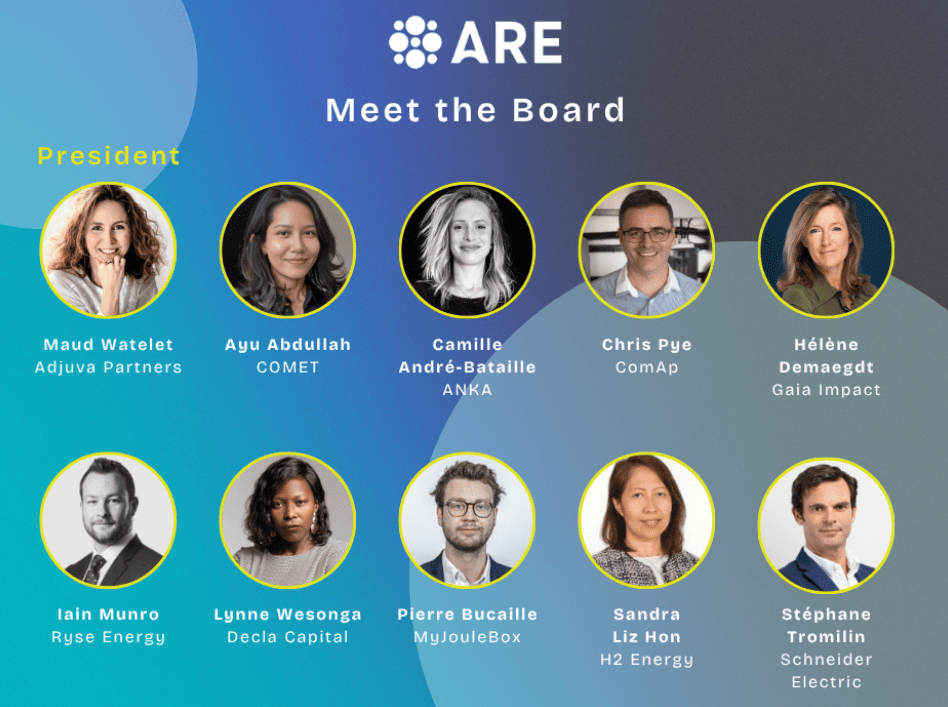
29 June 2026: The Alliance for Renewable Electrification (ARE) held its General Meeting on 25 June 2026, where Mrs Maud Watelet (Adjuva Partners) was re-elected as President of ARE. Four Board Members were also elected: Mrs Ayu Abdullah (COMET), Mrs Maud Watelet (Adjuva Partners), Mr Pierre Bucaille (MyJouleBox), and Mr Stephane Tromilin (Schneider Electric).

ARE also extends its gratitude to outgoing Board Member Gillian-Alexandre Huart (ENGIE Energy Access) for his valuable contributions to the organisation’s mission.

Mrs Maud Watelet, the re-elected President, serves as Founder and Managing Director of Adjuva Partners, an advisory firm specialising in investment strategy, due diligence and valuation. Previously, she served as Senior Investment Officer at EDFI MC – ElectriFI, where she originated, structured and managed investments in the energy access sector, principally across Sub-Saharan Africa and South-East Asia. Prior to this, she worked as an investment advisor for family offices and as Executive Director of Korys Capital, an alternative fund investing in renewable energy and cleantech companies. She also serves as a Board Member for DRE companies and venture capital funds.

On her re-election, Ms Maud Watelet commented: “I am honoured by the trust our members have placed in me for a second term. Building on the momentum of the past year, from the record-breaking EAIF 2026 in Nairobi to the launch of our expanded mandate, the Board and I are committed to delivering concrete, lasting impact. Over the next two years, we will strengthen ARE’s advocacy voice, deepen our service to members across all technologies and regions, and ensure the Association remains a powerful force for integrated renewable electrification in emerging markets.”

Continuing their mandates on the ARE Board are Mrs Camille André-Bataille (ANKA), Mr Christopher Pye (ComAp), Mrs Lynne Wesonga (Decla Capital), Mrs Hélène Demaegdt (Gaia Impact), Mrs Sandra Liz Hon (H2 Energy Sdn Bhd), and Mr Iain Munro (Ryse Energy).

In 2025, ARE’s collective voice has grown clearer and more influential — carrying the case for renewable electrification in emerging markets onto European, African and Asian stages, and into conversations that have historically been shaped by other actors. Throughout the year, ARE has continued to affirm its role as a trusted convener: bridging on-the-ground realities with high-level policy dialogue, and connecting the local to the global and back again.

Drawing on the collective expertise of ARE Members, the commitment of the ARE President, Board and Team, and the continued support of international institutions and governments, ARE is well positioned to deliver impact at greater scale and with lasting effect under its expanded mission.

ARE’s expanded mission for 2026 underscores a commitment to accelerating renewable electrification across the full energy landscape—from energy access and productive use to commercial and industrial applications, as well as modern grid and utility integration—while continuing to serve its members with a broader, future-focused vision.

On the occasion of the election of the new ARE Board, Mr David Lecoque, CEO of ARE, said: “This renewal of our dynamic Board reflects both the strength of our community and the ambition that drives ARE. With Mrs Watelet’s continued leadership and the energy of our new and returning Board Members, ARE enters this next chapter with a shared sense of purpose — and a clear mandate: to make our voice count where it matters most, while expanding the business avenues available to our Members to drive growth and impact at scale. The DRE sector is at a turning point, and we have both the talent and the determination to make our voice count where it matters most.”

29 June 2026: The Council for Critical Minerals Development in the Global South, a collaborative platform dedicated to helping emerging economies build secure, local mineral supply chains that drive domestic industrialization, officially handed over a landmark report to the Honourable Minister of Solid Minerals Development, Dr. Dele Alake, OON, during the 5th African Natural Resources and Energy Investment Summit (AFNIS 2026).

The report charts a direct line from Nigeria’s clean energy ambitions to its mineral wealth. It maps national demand for solar PV, energy storage and electric vehicles. The report also assesses current supply and trade positions, identifies the gaps and sets out strategic pathways to close them.

The report’s central finding is clear: Nigeria’s endowment of lithium, copper and bauxite aligns precisely with the minerals needed to accelerate the country’s green energy transition.

Receiving the report, Minister of Solid Minerals Development, Dr. Dele Alake noted: “By mapping domestic demand, supply and trade patterns, this report provides mineral-specific policy pathways to leverage Nigeria’s resources for our own green industrialisation.”

The Council, hosted by Sustainable Energy for All (SEforALL) and the Global South Centre for Clean Transportation, in partnership with the Ministry, are committing to the next phase. This includes a mineral-to-manufacturing localization roadmap, to retain more value in-country. Greater South-South investment partnerships, to connect Nigeria with manufacturers and investors across the Global South, and to work with local stakeholders to advance green industrialization projects, will be pursued.

The handover at AFNIS 2026 closes a loop that began at AFNIS 2024. Since then, the Council, the Ministry of Solid Minerals Development, and Core International have collaborated to deliver the report. The ceremony took place at the State House Conference Centre, Presidential Villa in Abuja.

1 July 2026: The Mulembwe hydroelectric power plant in Burundi, officially inaugurated by Prime Minister of Burundi Nestot Ntahontuye, on 16 June, marks a new milestone in national efforts to strengthen electricity production in Burundi.

The inauguration of the Mulembwe hydroelectric power plant (17 MW), following that of the Jiji power plant (32.5 MW) in June 2025, marks the completion of a major program aimed at achieving energy self-sufficiency and promoting economic development in Burundi. These facilities were designed to meet the country’s growing energy needs while promoting sustainable economic growth.

Located in Burunga Province, in the country’s southwest, these power plants mark a significant milestone in the country’s energy development, with a combined generating capacity of 49.5 megawatts. Together, the two plants will have an annual output of 239 gigawatt-hours and will supply power to 7,000 businesses and 1,700 industrial facilities across the country, as well as 15,000 households in the project area.

The additional energy produced will promote the development of small and medium-sized enterprises and will also support investment, job creation, and economic growth.

The Prime Minister expressed his gratitude to all partners who contributed to the project’s completion and reaffirmed his commitment to pursuing similar initiatives to ensure a sustainable energy future.

“The Jiji and Mulembwe dams represent a major milestone in Burundi’s journey toward emergence. Electricity is a key driver of our country’s industrial development, mining sector, and future railway infrastructure,” said Prime Minister Nestor Ntahontuye.

The construction of the Jiji and Mulembwe power plants is the result of close collaboration between the Government of Burundi and its development partners, notably the African Development Bank Group, the European Investment Bank, the European Union and the World Bank Group.

The sites have already created hundreds of local jobs and will continue to generate employment opportunities in the energy sector. The availability of clean energy will certainly open the door to potential private investment opportunities.

Mouna Diawara, the African Development Bank Group’s Country Manager for Burundi, said: “The inauguration of Jiji and Mulembwe marks a transformative moment for Burundi’s energy future. This project is one of the country’s most important energy investments: one that will help nearly double national generation capacity, expand access to affordable renewable power, and create the foundation for private-sector growth, jobs and economic diversification. Today’s achievement reflects the power of partnership, bringing together the Government of Burundi and development partners to deliver a transformative infrastructure that will power opportunity for generations to come.”

European Investment Bank Vice President, Marko Primorac, stressed that: “Clean energy is among EIB Global’s top investment priorities, reflecting Europe’s commitment to delivering cleaner, more affordable, and more reliable energy to hundreds of millions of people in Africa. The commissioning of the Mulembwe hydropower plant, following that of Jiji, illustrates the tangible impact of these investments on the ground.”

The European Union Ambassador to Burundi, Elisabetta Pietrobon, reiterated: “Jiji-Mulembwe is a model project that almost fully aligns with the priorities we have set under the EU’s Global Gateway strategy, by facilitating access to clean, renewable, and affordable energy. We are particularly pleased with the significant role played by European companies and expertise, from the initial feasibility studies through to the commissioning of the infrastructure.”

The World Bank Group Vice President for Eastern and Southern Africa, Ndiamé Diop, said: “The commissioning of the Mulembwe hydroelectric power plant marks a major step forward in providing households, businesses, and public services with access to reliable electricity, which is essential for creating jobs and stimulating economic activity. The World Bank Group is proud to support this effort alongside the Government of Burundi, REGIDESO, and all partners. This project is fully aligned with Mission 300, an ambitious regional initiative aimed at connecting 300 million Africans to electricity by 2030, whose priorities Burundi has adopted through its National Energy Compact.”

2 July 2026: The World Bank Board of Directors today approved $265 million to support the Ifahsa Pumped Hydropower Storage Project in Morocco, a major clean energy infrastructure investment in northern Morocco and one of the most significant of its kind on the African continent.

The project will strengthen the reliability and resilience of Morocco’s electricity system by providing flexible storage capacity to support the integration of higher levels of renewable energy generation and will provide Moroccan electricity consumers – including households and businesses – with a more reliable, cleaner supply of electricity.

Located near Chefchaouen, the project will serve as a giant rechargeable battery for the national electricity grid. During periods of high renewable energy production — when the sun is shining, or the wind is blowing — the facility can pump water to an upper reservoir. That water is then released through turbines to generate electricity precisely when it is needed most.

The initiative will create real economic opportunities for Moroccan communities. During construction, the project is expected to generate around 820 direct jobs annually, while the renewable energy capacity it enables will create additional employment opportunities across the energy sector and beyond. Moroccan businesses will also benefit from access to cleaner electricity, strengthening their position in international markets that increasingly demand low-carbon supply chains.

The 300-megawatt facility will enable Morocco to integrate at least 1 gigawatt of additional solar and wind energy into its national grid, helping unlock around $1 billion in private investment. In doing so, it will replace approximately 3 terawatt-hours of electricity currently generated from fossil fuels each year — avoiding an estimated 1.7 million tons of CO₂ emissions annually.

The World Bank's contribution combines financing from the International Bank for Reconstruction and Development (IBRD), concessional financing from the Clean Technology Fund, and a grant from the Livable Planet Fund. The project is co-financed by the African Development Bank and implemented by the Office National de l'Électricité et de l'Eau potable (ONEE). Together, the co-financing by the two multilateral development banks demonstrates how international partnerships can mobilize funding for large-scale clean energy investments and accelerate the transition to a more resilient, low-carbon energy future.

9 July 2026: Mali’s National Transitional Council (CNT) unanimously adopted a bill authorising the ratification of loan agreements signed on 25 February 2026 between the African Development Bank Group and the Malian government for the partial financing of the Bamako North 225 kV Loop Project. The project, with a total estimated cost of $190 million, aims to strengthen the security and reliability of electricity supply in the capital, Bamako, and surrounding areas.

The adoption of the bill paves the way for implementation of the project, which will modernise Bamako’s electricity transmission and distribution network, connect 10,000 new households and small businesses to the grid, and improve the quality of supply for around 40 industrial units.

The African Development Fund, the concessional lending window of the African Development Bank Group, has approved a loan of $35.27 million for the project, while the Transition Support Facility is providing a loan of $18.99 million. The Climate Investment Funds has granted a $5 million loan and a $6.8 million grant, complemented by a $2.2 million grant from the Green Climate Fund. Together, these resources amount to $68.26 million, or 36.13 percent of the project’s total cost. Co-financing is being provided by the West African Development Bank (27.36 percent), the Islamic Development Bank (32.91 percent) and the Malian government (3.6 percent).

The project addresses major challenges in Mali’s electricity subsector. In 2023, the national electricity access rate was estimated at 55.8 percent, including 86.6 percent in urban areas and 30.4 percent in rural areas. Demand is increasing by about 10 percent annually, while generation capacity remains insufficient and continues to rely heavily on thermal power. The sector also contends with high network losses, dependence on fuel imports, and financial pressures requiring state subsidies.

Specifically, the project provides for the construction of a 225 kV high-voltage power line between the Kodialani and Dialakorobougou substations, the creation of two new substations at Safo and Kénié, and the extension of three existing substations at Kodialani, Kambila and Dialakorobougou. It also includes medium- and low-voltage lines to improve electricity distribution and serve new neighbourhoods in Bamako.

In the long term, these investments will facilitate the transmission of electricity from future supply sources, including the Guinea-Mali interconnection, the Manantali 2 line and the solar power plants planned at Kambila and Safo. They will help expand access to more reliable, sustainable, and affordable energy, while supporting economic activities, particularly agricultural value chains and jobs for young people and women.The official launch of activities is planned for the third quarter of 2026 and once implemented, the project is expected to secure Bamako’s electricity supply, improve service quality for households and businesses, and support the transition to a more resilient energy system.

Search